
Tripura is a state in northeastern India. The third-smallest state in the country, it is bordered by Bangladesh to the north, south, and west, and the Indian states of Assam and Mizoram to the east. The area of modern Tripura—ruled for several centuries by the Manikya dynasty—was part of an independent princely state under the protectorate of the British Empire. The independent Tripuri Kingdom (also known as Hill Tippera) joined the newly independent India.
Tripura lies in a geographically isolated location in India, as only one major highway, the National Highway 8, connects it with the rest of the country. Five mountain ranges—Boromura, Atharamura, Longtharai, Shakhan and Jampui Hills—run north to south, with intervening valleys; Agartala, the capital, is located on a plain to the west. The state has a tropical savanna climate, and receives seasonal heavy rains from the south west monsoon. Forests cover more than half of the area, in which bamboo and cane tracts are common. Tripura has the highest number of primate species found in any Indian state. Tripura is one of the most literate states in India. Mainstream Indian cultural elements coexist with traditional practices of the ethnic groups, such as various dances to celebrate religious occasions, weddings and festivities; the use of locally crafted musical instruments and clothes; and the worship of regional deities. The sculptures at the archaeological sites Unakoti, Pilak and Devtamura provide historical evidence of artistic fusion between organised and tribal religions.
Tripura cuisine
Tripura’s cultural diversity is reflected in the food habits of the tribal and non-tribal people. Leaving aside the rich spicy food or even two or three varieties of Chinese cuisine served in restaurants in urban centres, the non-tribal Bengalis of Tripura live on rice, fish, chicken, mutton and pork though a small section of Muslims consume beef which is not easily available in the state. However, the non-tribals take great pains in preparing spicy curries of a large variety of fishes available in plenty within the state and also imported from Bangladesh. The most popular and delicious preparation of fish is, however, the boiled ‘Hilsa’ punched with mustard seed and green chilly.


The traditional Chuak is the rice beer prepared by fermenting rice in water. It is drunk on social occasions and ceremonies. Apong, a local drink is also made from millet rice.
Muya Awandru is a Tripuri food item which contains bamboo shoot, rice flour and Berma.
The Kosoi Bwtwi is made of Beans and Berma.
Muya bai Wahan is another food item of bamboo shoots, jackfruit, papaya, and pork.
*Gudok is prepared by bamboo pipes. It has special aroma and taste. It is also made in pan now-a-days.Wahan is a dish made of pork.
Tripura must visit places
Tripura is one of the and hilly states of Northeast India which is hardly talked about and we wonder why! The third smallest state of India, Tripura covers an approximate area of 10, 486 sq.Km. It also shares a border with Bangladesh. The most amazing factor about Tripura is that it is an eco-friendly and pollution-free state. The state is home to the 19 tribes, who are friendly and very welcoming to tourists. When talking about its beauty, then it won’t be wrong to state that it is simply breathtaking. One of the 7 sister states of the country, one will gain a very unique experience here because the lifestyle here is way too different from the rest of India. The most exciting part about the state are amazing places to visit in Tripura which makes it worthwhile.
Mosdeng serma is a Tripuri chatney made of berma, red chilli, garlic and tomato
TOURIST PLACES TO VISIT
- Agartala – Capital City

Agartala is the capital of Tripura, is one of the largest cities in that state and one of the most popular places to visit in Tripura. The place is famous for its terrains which are full of green pastures, hills and beautiful valleys. The main attraction of this place is Ujjayanta Palace. You would require to plan at least two days if you wish to cover Agartala in detail. Ujjayanta Palace is a royal house built by Maharaja Radha Kishore Manikya . The palace is known for its architecture which has three domes, tiled floors, carved wooden ceiling, and beautifully crafted doors. Also, there is a Mughal style garden on the outside of this royal palace.
- Amarpura – Ideal Picnic Spot

Amarpura is one of the best places to visit in Tripura and is considered as an ideal picnic spot. People often drive here over weekends to sit and pass their day on the banks of the Amar Sagar lake which is an artificial lake built in the 16th century. The city mostly stands on ancient ruins and also has a temple dedicated to Mangalchand (the eight-headed goddess). Also, if you go there during February, a fair is held to celebrate the month of flowers. There are two other lakes in this place – Dumboor Lake and Chobimura. Water Sports facility is also available in Amarpura. Other than this there are various other fairs and events held in this place to keep people visiting this place engaged all year round.
- Melaghar – Vibrant Town

Melaghar is also a town located 50 km from Agartala. The place is famous for Neermahal which is situated in the middle of Rudrasagar Lake. The place has got very peaceful vibes. It is also famous for Durga Puja Festival. The entire town looked blessed when it is lit with beautiful lights during this festival. There are various puja pandals played across the roads and everybody seems to enjoy it. Another festival, which is dearly celebrated in Melaghar is Ratha Yatra which is held every year in July. To satisfy your spirit for shopping you can come down to Anandabazar which has everything right from daily staples to big showrooms to cater to all your needs. Other popular places to visit in Tripura include Veeramma Kali Mandir, Pagli Masi Temple, and Melaghar Kali Temple.
- Kailashahar – Ancient Capital

Kailashahar is another town in the state of Tripura and is located very near to Bangladesh borders which makes it one of the best places to visit in Tripura. The town was the capital of Tripura in ancient times and have roots associated with Unakoti. The main festival of Kailashahar is Durga puja and the city is decorated with fancy lights and Goddess Durga pandals. The town is blessed with beautiful landscapes and lush green gardens. The main tourist attractions here are Lakhi Narayan Bari and Chouddo Devotar Temple. Also, there are several tea estates around the town. Some of them are managed privately and most of them are famous for organic tea that they grow here.
- Dharamnagar – Naturally Beautiful Landscapes

Dharamnagar is the second-largest city in Tripura next to Agartala and is located in the north part of Tripura. The place is known for naturally beautiful landscapes. There are several top-quality boarding schools located in this city. The temperature is always mild here, both in winters and summers. However, the place is adorned with very heavy rainfalls. The city is built over ancient ruins and is known for many famous historical monuments. Haflong is a famous tea garden which is known for its beauty and lies just a short distance from Dharamnagar. Also, Unakoti which is an ancient site with huge rock-cut images lies near Dharmanagar.
TRIPURA TRADITIONAL ATTIRE
Tripuris have their own traditional dress, similar in style to that of other North-East Indian peoples. It is, however, different in pattern and design. The clothing for the lower half of the body is called rignai in Tripuri and for the upper half of the body, the clothing has two parts, the risa and rikutu.
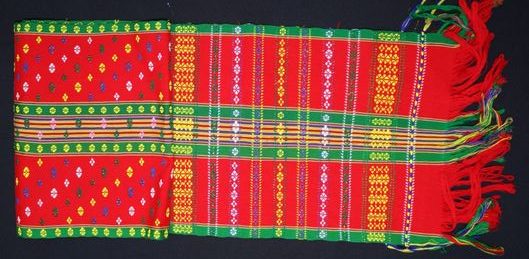

Isree(Qeen) Monmohini Devi in Traditional Risa The risa covers the chest area and the rikutu covers the whole of the upper half of the body. Formerly, these garments were woven by women using home-spun cotton thread. Nowadays, the threads are bought from the market and the risa is not worn; instead a blouse is worn by most Tripuri women. Girls wear rignai with tops, too. Each Tripuri clan has its own rignai pattern and design. The patterns of the rignai are so distinct that the clan of a Tripuri woman can be identified by the pattern of her rignai. However, there is intermingling of the rignai: Clans wear the rignai of other clans freely and new designs are being woven. The rikutu is plain cloth of a different colour and shade than the other items of clothing. Today, the rikutu is woven by Tripuri women. The male counterpart for the loin area is rikutu and for the upper part of the body is the kamchwlwi borok.
HANDICRAFTS

Tripura is noted for bamboo and cane handicrafts. Bamboo played important part in the jhumia (shifting cultivation) of the tribes. It was used to make watch stations on stilts and was devised to carry food and water. Besides these usages, bamboo, woods and cane were used to create an array of furniture, utensils, hand-held fans, replicas, mats, baskets, idols and interior decoration materials.
SONGS AND DANCES
Music and dances are integral part of the tribal people of Tripura. Some of their indigenous musical instruments are the sarinda, chongpreng, and sumui (a kind of flute). Songs are sung during religious occasions, weddings, and other festivals. Each tribal community has their own repertoire of songs and dances. Besides tribal music, Indian classical music is also practiced among the residents. Sachin Dev Burman of the royal family was a maestro in the filmi genre of Indian music, creating many popular tunes in the bollywood films.

FESTIVALS AND WORSHIPS
Hindus believe that Tripureshwari is the patron goddess of Tripura and an aspect of Shakti. Several fertility gods are also worshiped by the tribes, such as Lam-Pra (the twin deities of sky and sea), Mailu-ma (goddess of corn, identified with Lakshmi), Khulu-ma (goddess of the cotton plant), and Burha-sa (god of healing). Durga Puja, Kali Puja, Ashokastami and the worship of the Chaturdasha deities are important festivals. Several festivals represent confluence of several tribal traditions, such as Ganga puja, Garia puja, Kherchi puja, Ker puja


